AI Chatbot vs Live Chat: Which Is Better for Your Website?
AI chatbot vs live chat compared: speed, cost, night coverage, answer quality. When a bot alone is enough and how to combine both for maximum leads.
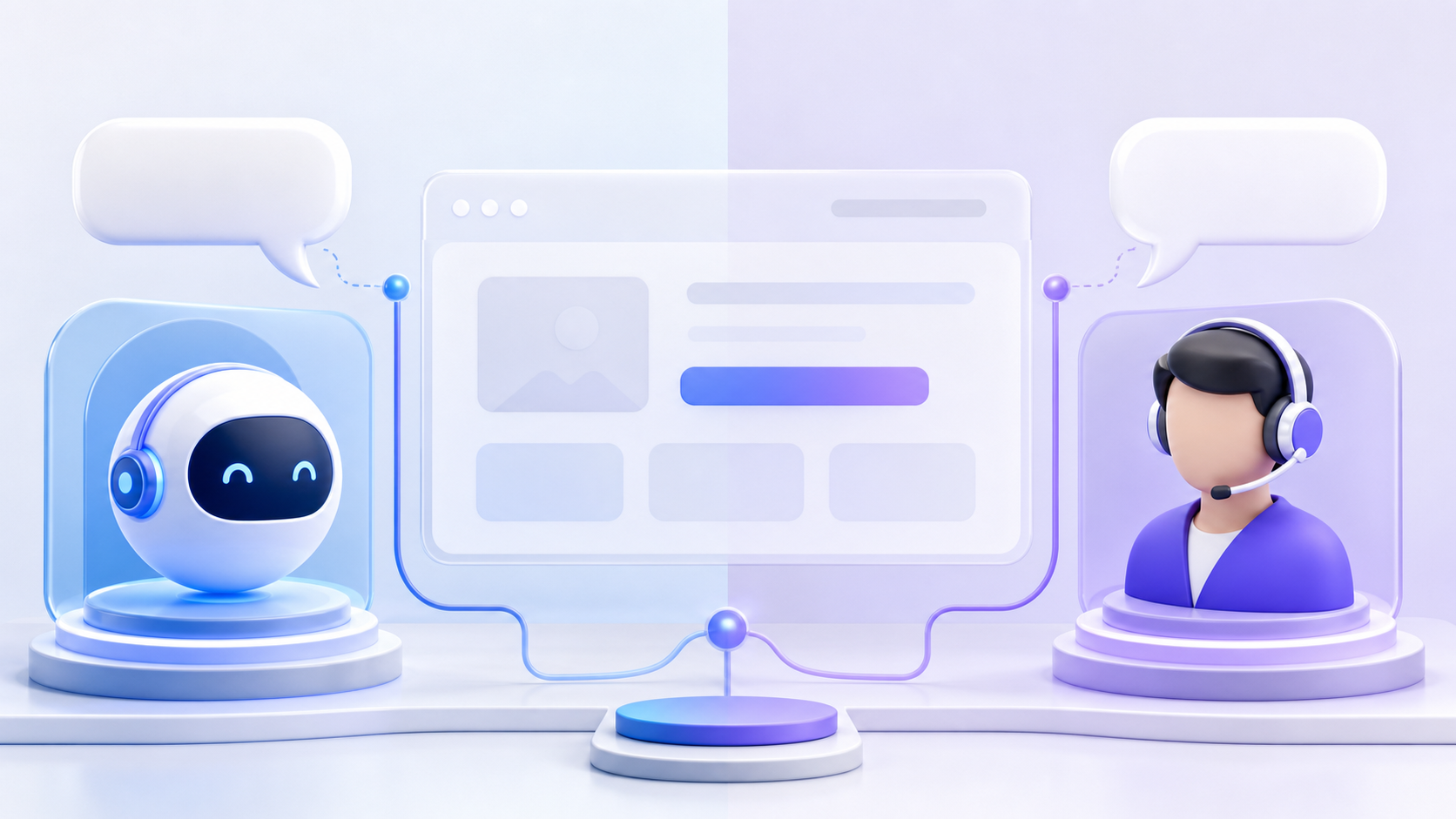
The short answer: do not choose — combine. An AI chatbot instantly handles routine questions 24/7, while a live operator steps in where a human is needed: complex cases, big deals, emotions. Let us compare the strengths of each approach and the setup where they reinforce each other.
What live chat is good at
A live operator brings empathy and flexibility:
- Understands context and nuance, handles objections.
- Solves non-standard situations that have no ready-made answer.
- Sells: feels the moment and closes the deal.
But humans have limits: working hours, vacations and sick days, a queue of dialogues at peak times. At night and on weekends a «live» chat turns into a «leave a message» form — and the visitor leaves.
What an AI chatbot is good at
- Replies instantly — no queue, no matter how many visitors arrive at once.
- Works 24/7 — nights, weekends and holidays do not exist for it.
- Stays consistent — never tired, never irritated, never forgets to ask for contact details.
- Costs a fraction of an extra employee per shift.
There are limits too: the bot answers within its knowledge base and will not replace an expert in a truly complex case. What an AI bot is and how it works — we covered separately.
Comparison by key criteria
Response speed
The bot replies in seconds at any time. An operator is fast only when online and free. And speed is the main conversion factor: the first minutes decide everything.
Nights and weekends
The bot wins outright: a noticeable share of traffic comes outside business hours, and without a bot those visitors get no answer at all.
Cost
An operator means salary, training and turnover — and costs grow with the volume of inquiries. A bot costs a flat fee and scales at no extra charge.
Complex questions and sales
Here the human is stronger. The optimal setup: the bot qualifies the visitor and collects contacts, and the manager takes over an already warm conversation.
The «bot + operator» setup: how it works
- The bot greets the visitor and answers routine questions: prices, timing, terms.
- The bot collects contacts when there is no answer or the visitor asks for a human.
- The operator sees every dialogue in the dashboard and can join the conversation at any moment.
- The history is preserved — the manager continues the conversation instead of starting over.
This way the team handles several times more inquiries without losing quality: the bot clears the routine, humans get the dialogues where they truly matter.
When a bot alone is enough
- A small business with no dedicated operator: the bot is on duty instead of you.
- Standardized services with predictable questions: price, booking, terms.
- A limited budget: starting with a bot is cheaper than hiring an operator shift.
FAQ
Will a chatbot fully replace an operator?
For routine questions — yes; for complex ones — no. In practice the bot closes most repetitive inquiries, while a human is needed in roughly 20–30 % of dialogues where a mistake is costly.
Will visitors realize they are talking to a bot?
Usually yes, and that is fine: visitors care about a fast, accurate answer more than about who gives it. An honest bot that offers to call a human right away earns more trust than an «operator» who replies every half an hour.
Can a dialogue be switched from the bot to a human?
Yes. In LeadMate the operator sees all dialogues in the Chat section and can join any of them — the visitor keeps chatting in the same window.
Conclusion
Put the bot on the first line: it replies instantly, works around the clock and collects leads. Bring the operator in where a human is needed. Install the widget — and both lines will work in a single chat window.